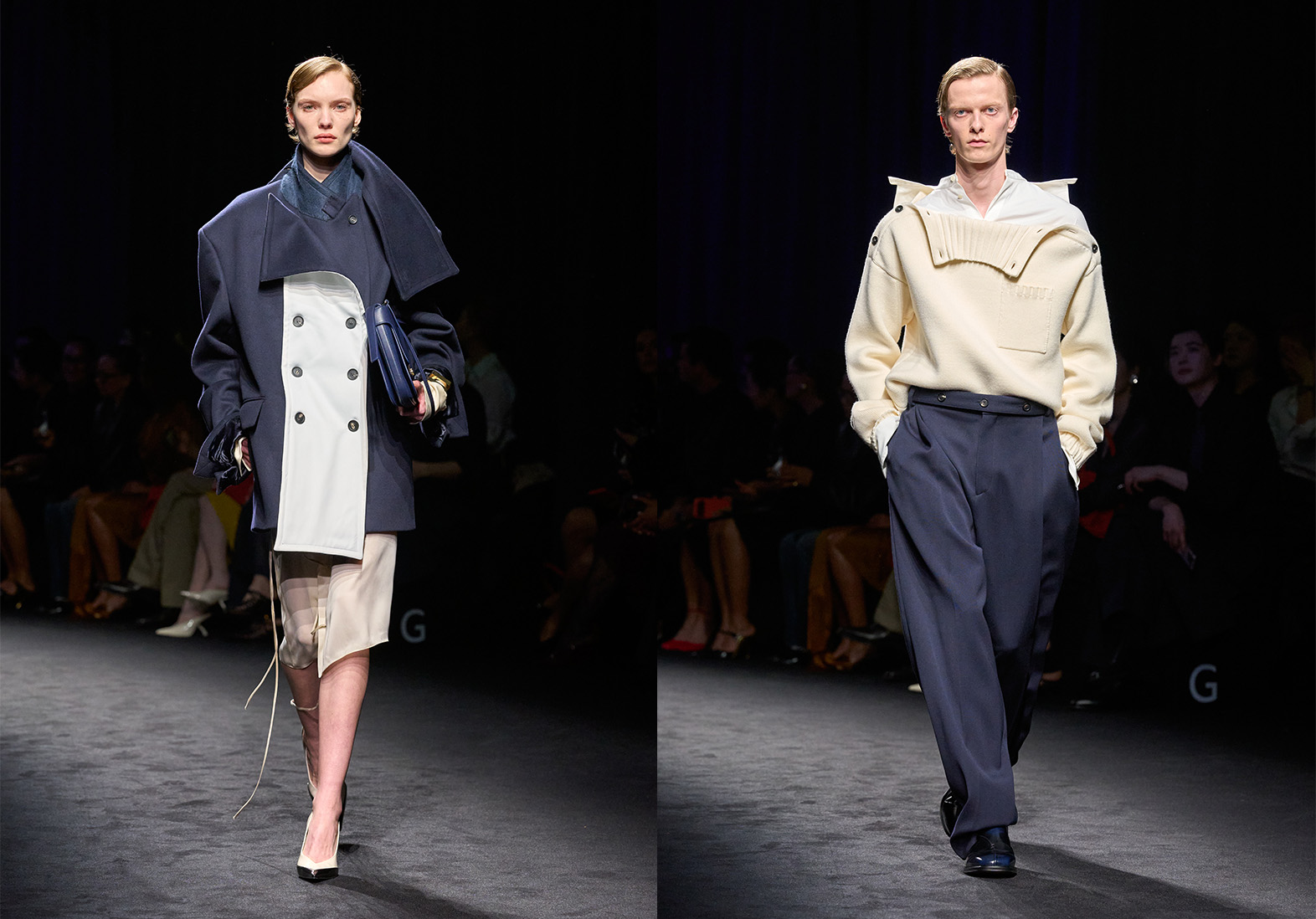
For Autumn-Winter 2026, Maximilian Davis continues to explore the 1920s, the period of Ferragamo’s inception, through the language he has established at the house. The speakeasy returns as a focal point – a locus of liberation; a space where conventions of class and identity are disrupted – and the collection is informed by the diverse characters who would intermingle and populate it after hours.
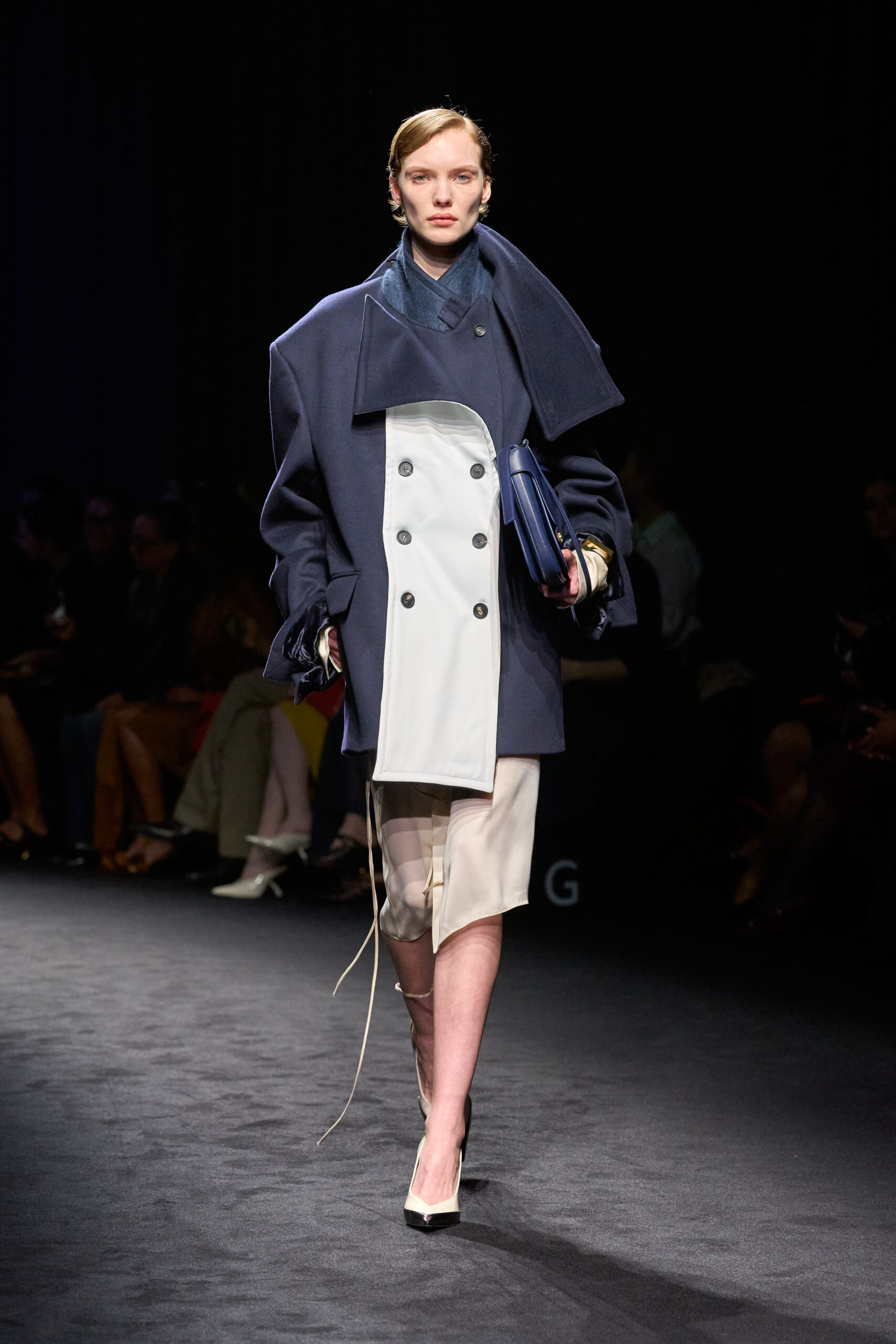
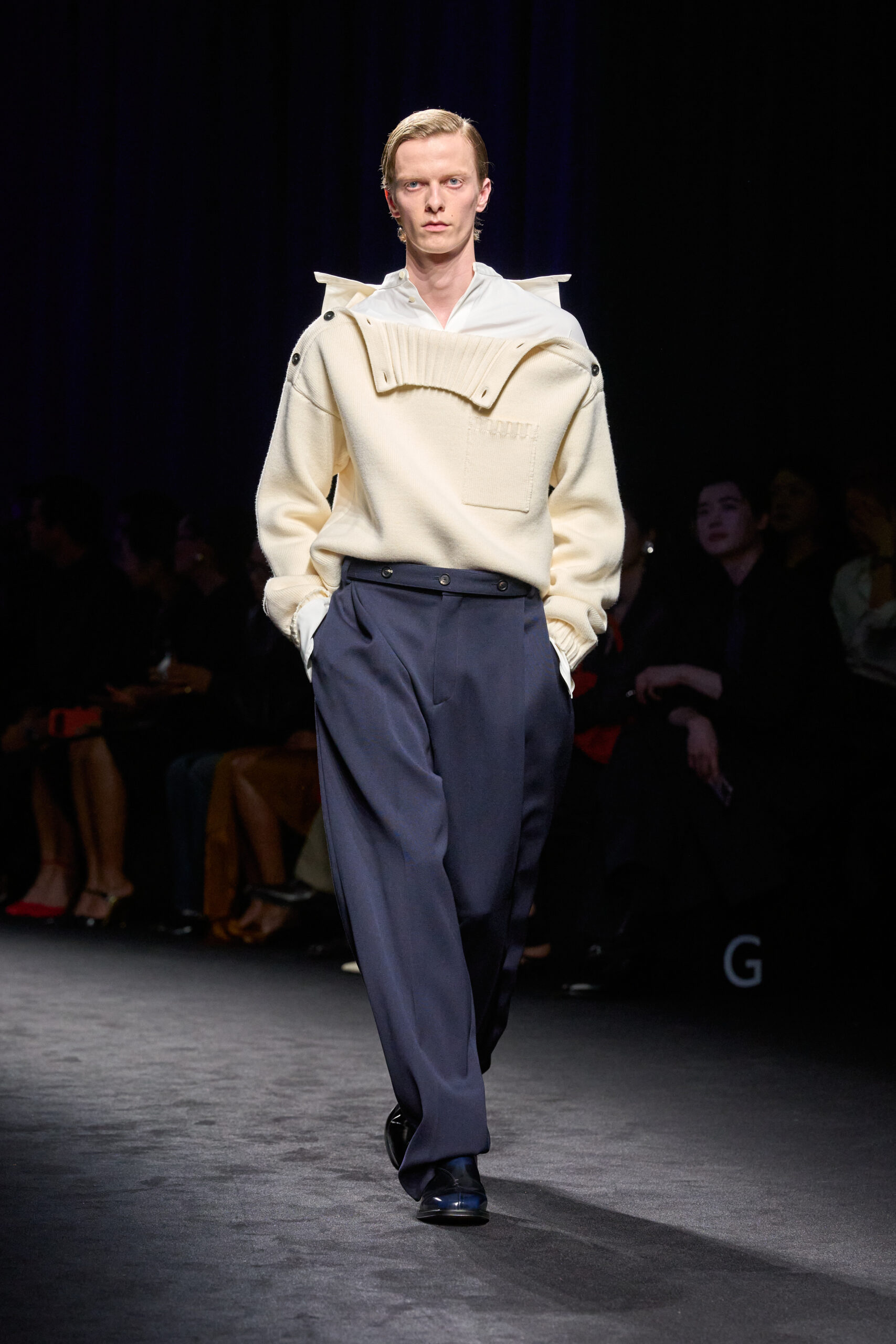
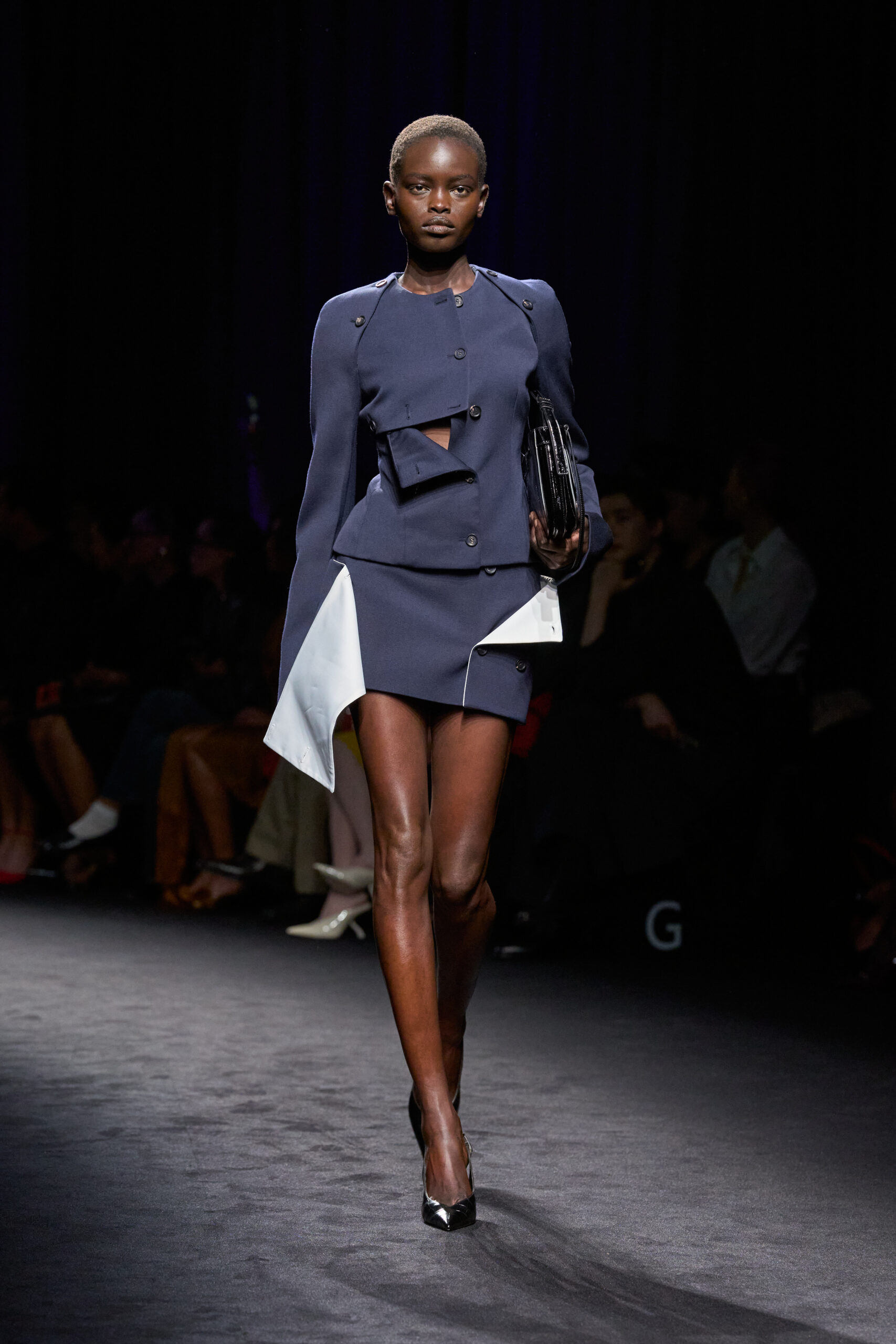
The clothing of sailors offers a foundational motif: those who would go to sea to build better lives for their families. “That’s something that both Salvatore and my own family experienced – he left his home in Italy for America before returning home, and my family moved from Trinidad and Jamaica to Manchester,” explains Davis. “They all crossed the water to discover new beginnings.” Sailor uniforms, and the status they signify, are both reconsidered and subverted: forms deconstructed; buttons displaced; fastenings undone. Their wardrobe is equally refigured through fabrication: nautical knitwear needle-punched with chiffon to structure its form; workwear parkas realised in textured nappa, their hoods lined with shearling.
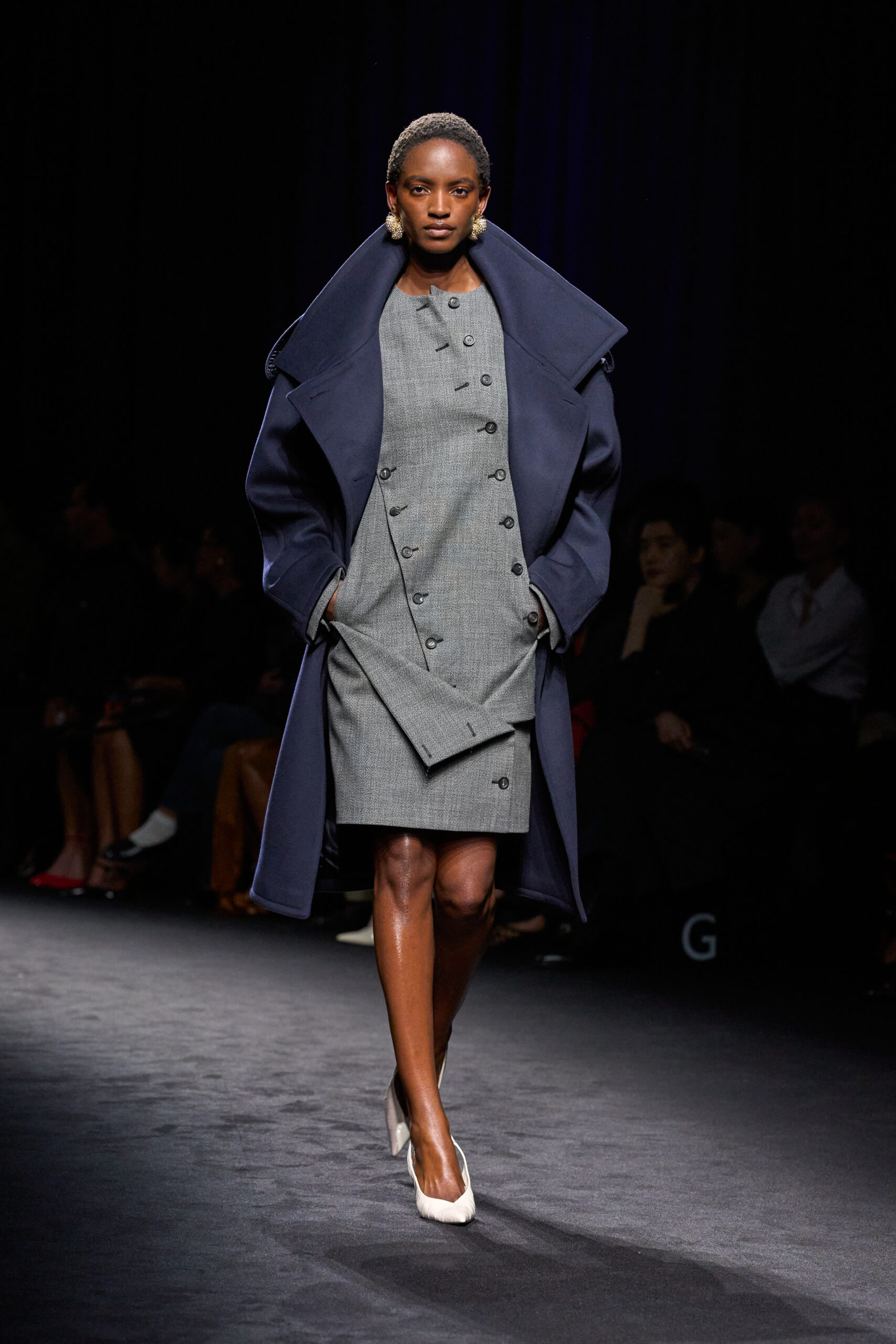
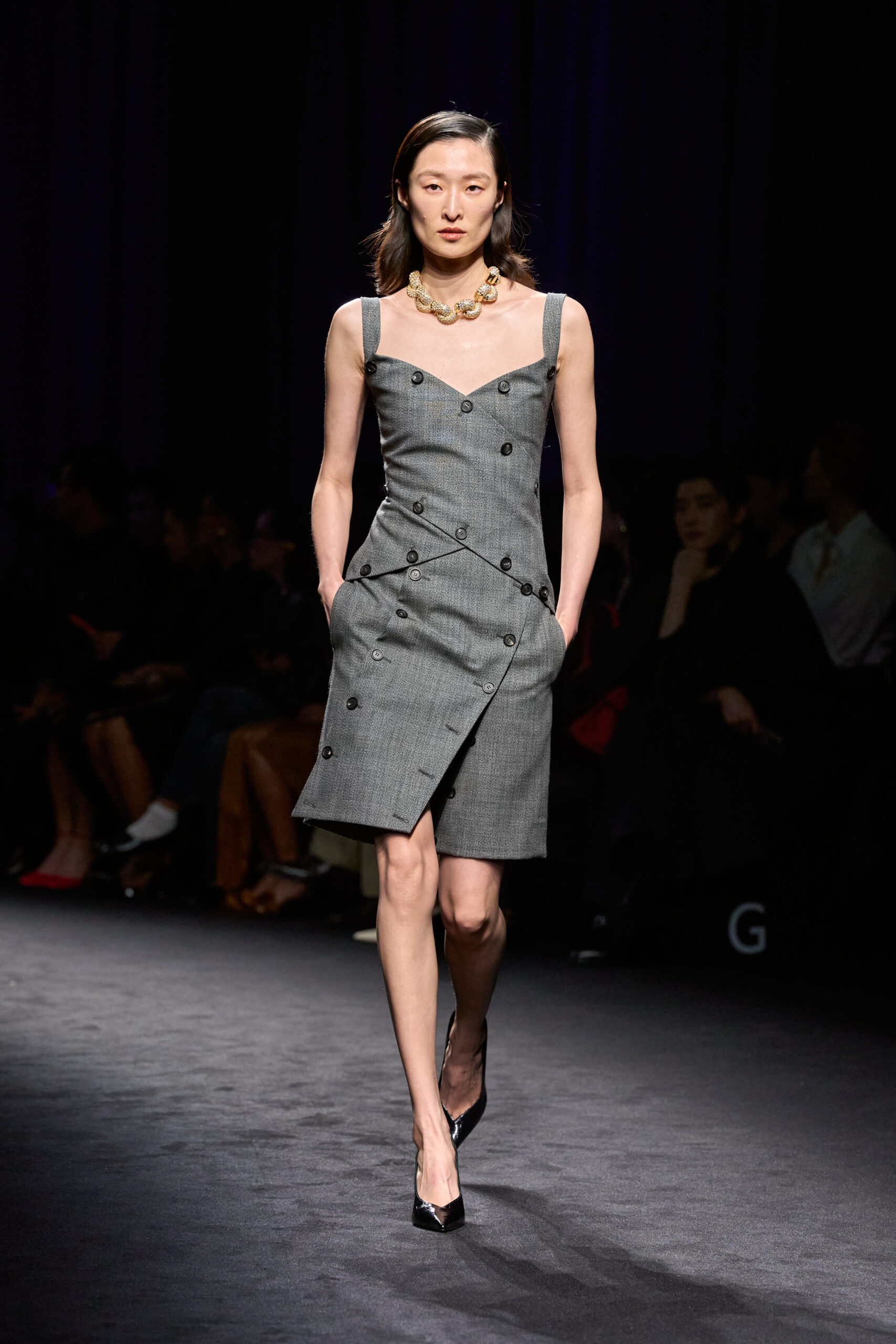
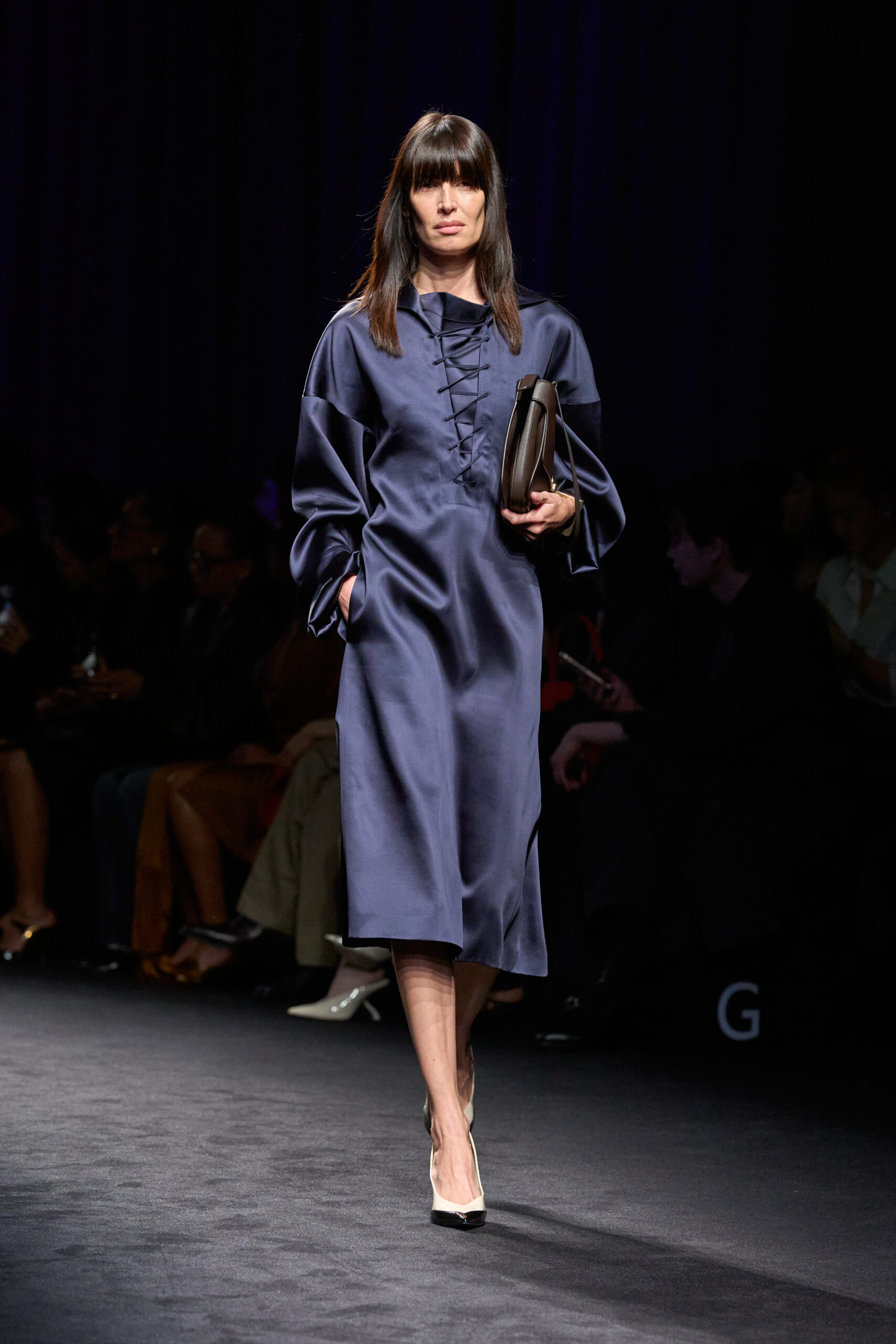
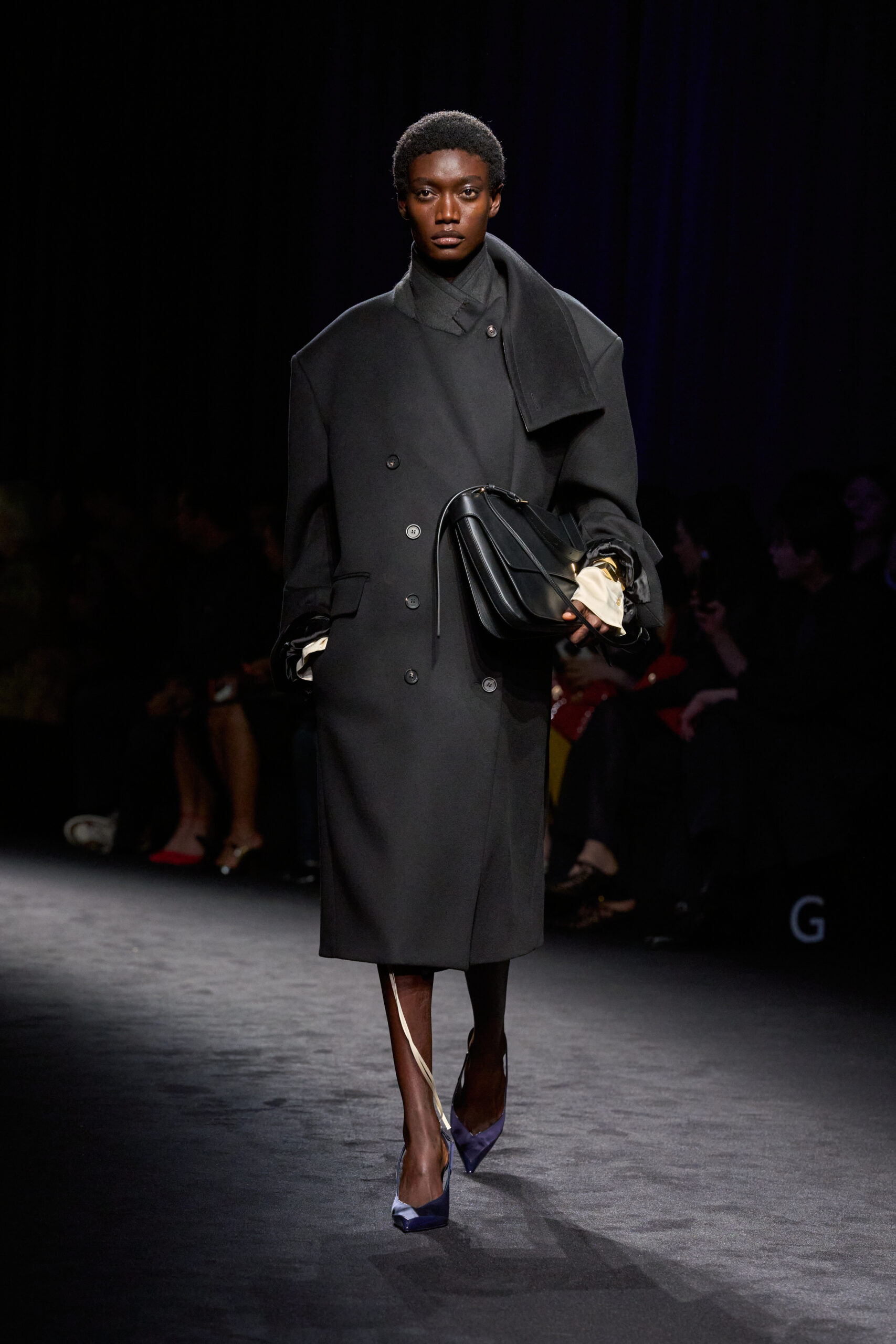
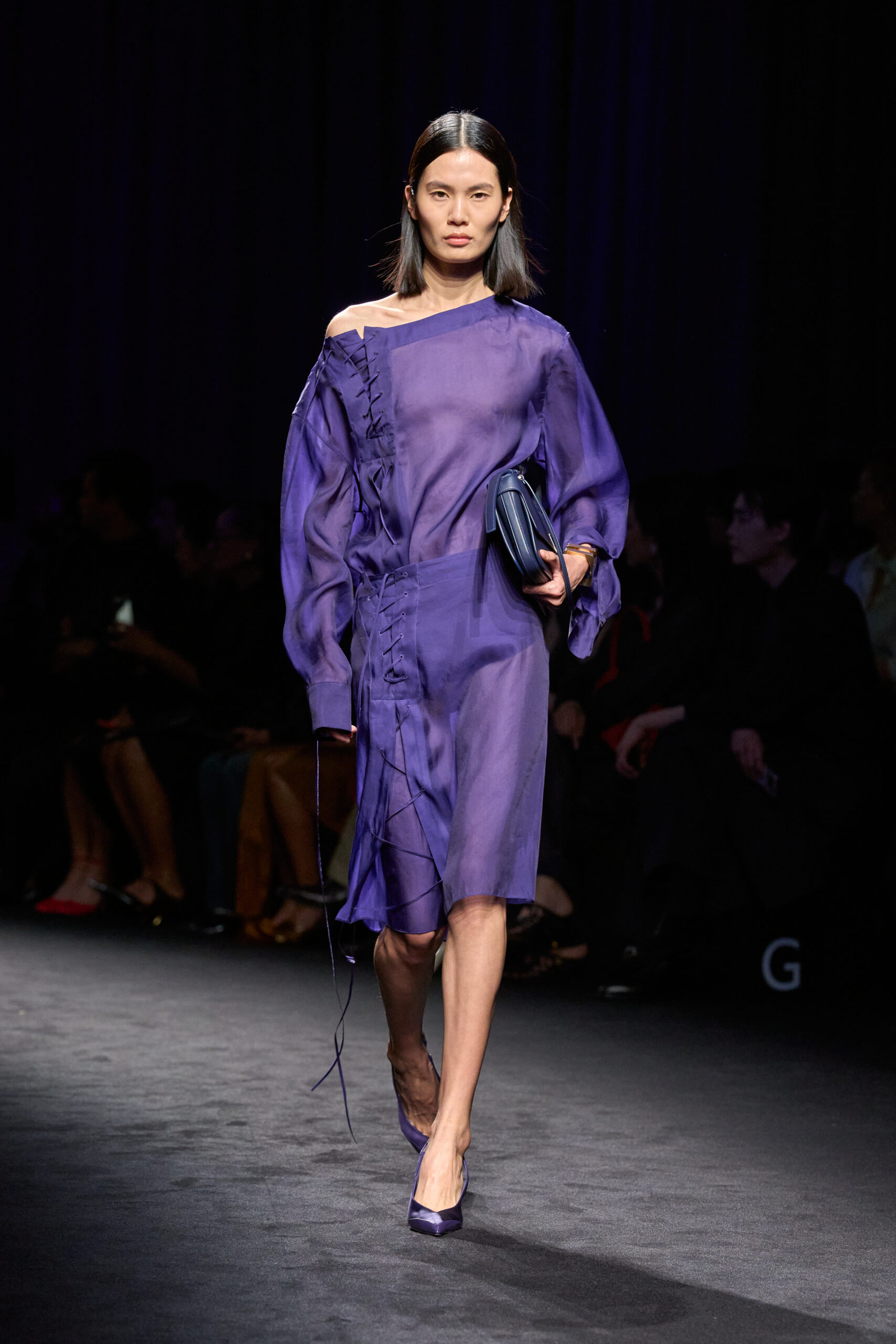
Alongside utilitarian attire, the liberated elegance of the period’s eveningwear emerges: slip dresses in foiled velvet lamé and floral jacquard; drapery decorated with volumes that connote the evolution of ruffles; cocooning outerwear that evokes couture silhouettes layered atop long-line gowns. In the collection, as in the speakeasy, the two intermingle.
Understood through artworks that depicted the era – the evocative dynamism of loosely Cubist watercolours and the sepia-toned monochrome of Surrealist photography – the collection’s palette appears tinted by time: organic cotton canvases and recycled nylons garment-dyed; quilted leathers aero sprayed. “It’s a translation of trying to imagine something from the past,” explains Davis. “In the original moment, it would have been vibrant – but now we are seeing it through the haze of history.” Punctuated by polished Gancini hardware, what results is an amalgam of past and present. In footwear, a new pointed stiletto and sling-back featuring a deep vamp inspired by the flat designed by Salvatore Ferragamo in 1954 appear in colour contrasts that echo nautical uniforms or are decorated with jewels. Elsewhere, the architecture of the “shell sole” – a technique pioneered by Salvatore Ferragamo in the 1950s, where the sole wraps around the foot – informs the curvilinear detail of sandals whose heel is hybridised with the silhouette of a wedge.
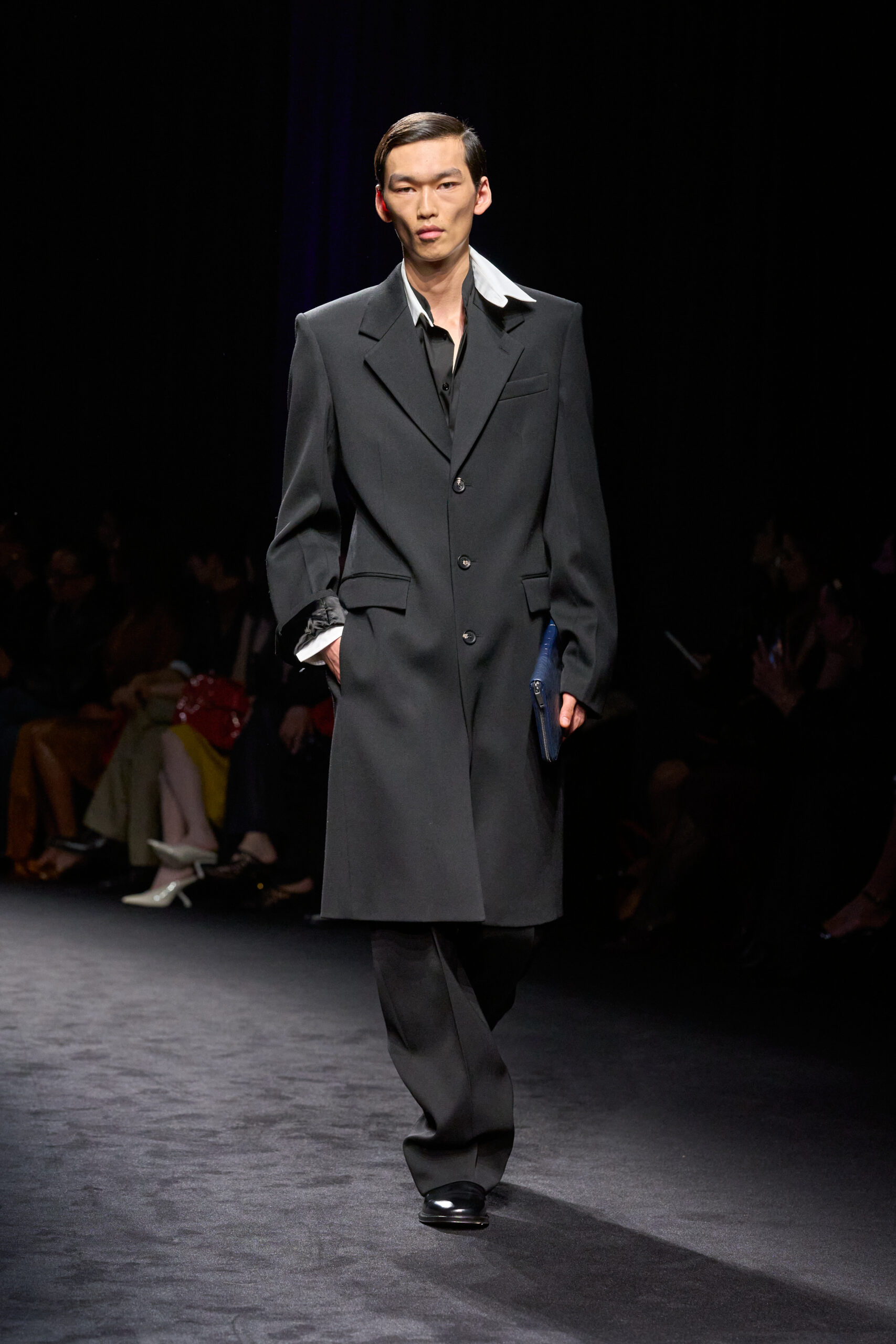
In menswear, formal Oxfords are reconsidered through a contemporary perspective – their proportions elongated and their toes apron-stitched – alongside a monk style fastened with a Hug closure and a clean, minimalist bootie. In accessories, a graphic new bag silhouette – slim and sleek and fastened with a Gancini plate – is introduced in three sizes, while the East-West proportion of the Hug is animated in new colourways. For menswear, a utilitarian cross-body pocket bag is used alongside a Hug pouch featuring woven calf leather.
For more information please visit:
https://www.ferragamo.com/